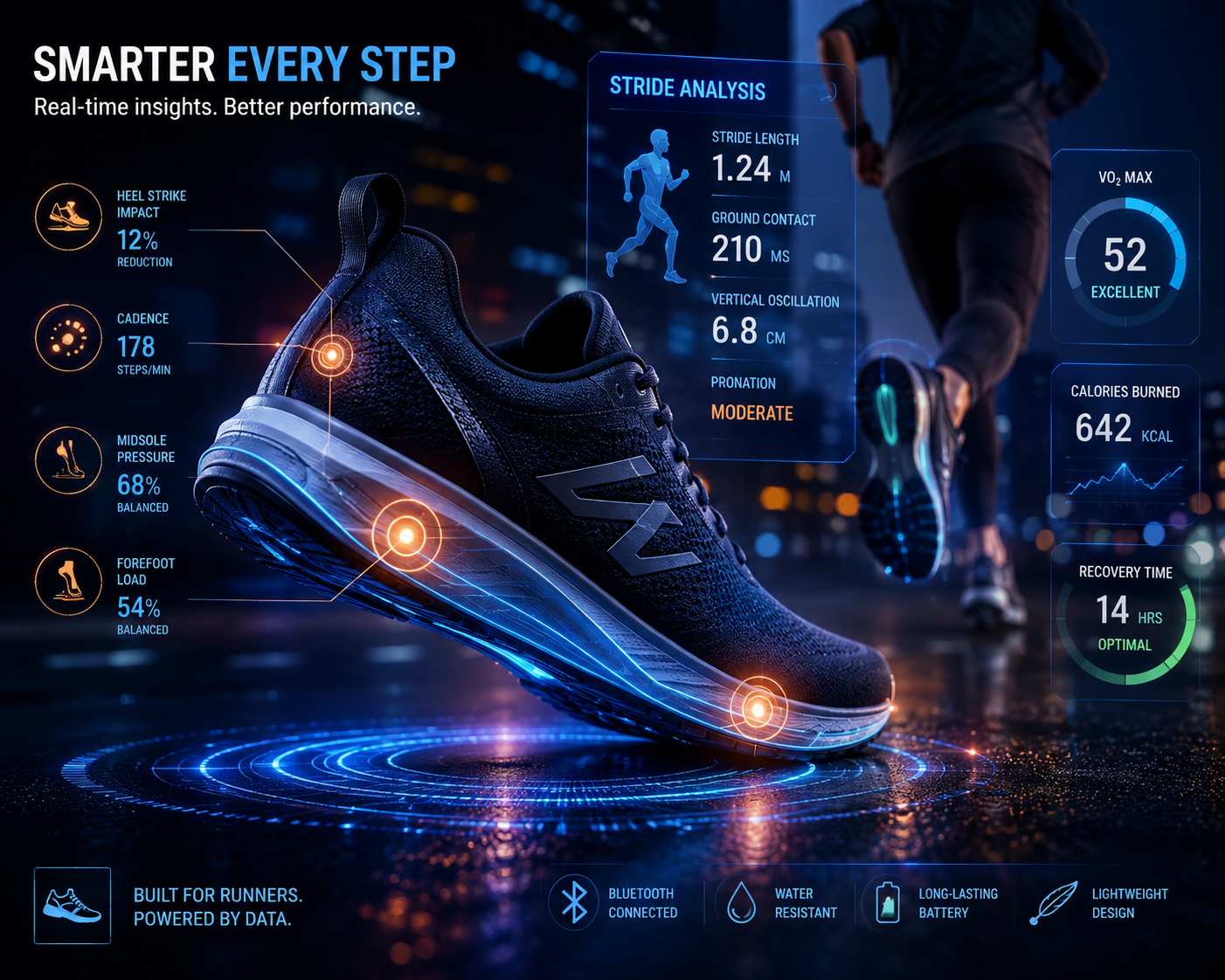
The Future of Running Is Already Here
Running has always been one of the simplest forms of exercise — just lace up your shoes and go. But today’s runners are stepping into a new era where footwear does far more than cushion your stride. Thanks to advanced sensors, AI analytics, and real‑time feedback systems, smart footwear is transforming the way athletes understand and improve their running form.
Sensor‑enabled shoes are becoming one of the most innovative fitness technologies, offering insights that were once available only in professional biomechanics labs. Now, runners of all levels can access detailed data about their movement, helping them run faster, safer, and more efficiently.
⭐ What Is Smart Footwear?
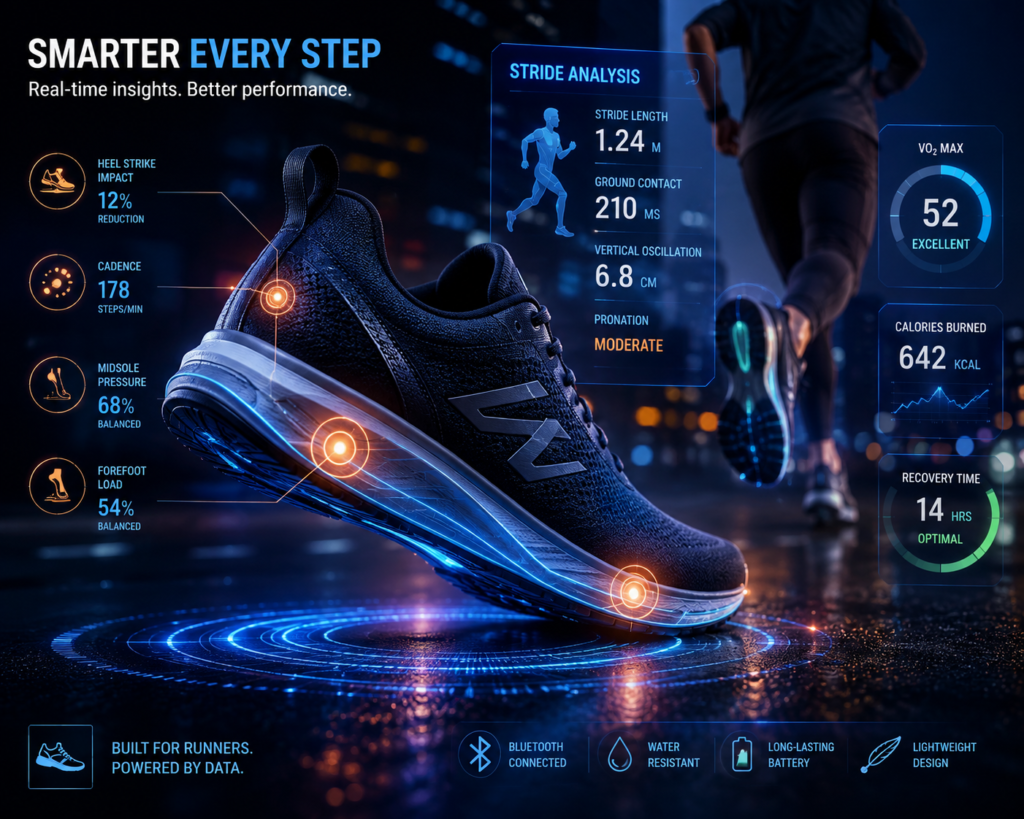
Smart footwear refers to shoes embedded with sensors and microchips that track and analyze various aspects of your running performance. These sensors measure:
- Foot strike pattern
- Pressure distribution
- Cadence
- Stride length
- Ground contact time
- Balance and stability
- Impact force
The data is then sent to a connected app or wearable device, where AI algorithms interpret the information and provide personalized recommendations.
🔬 How Sensor‑Enabled Shoes Work
1. Pressure Sensors
Placed in the midsole or insole, these sensors detect how your foot lands and how weight is distributed. They help identify:
- Heel striking
- Forefoot striking
- Overpronation
- Supination
This information is crucial for preventing injuries and improving efficiency.
2. Motion Tracking Chips
These chips monitor movement patterns such as:
- Stride length
- Speed
- Acceleration
- Foot rotation
They give runners a complete picture of how their body moves with each step.
3. AI‑Powered Analysis
The collected data is processed by AI systems that:
- Detect running inefficiencies
- Predict injury risks
- Suggest form corrections
- Recommend training adjustments
This turns raw data into actionable insights.
4. Real‑Time Feedback
Some smart shoes offer live feedback through:
- Audio cues
- Vibration alerts
- App notifications
This helps runners correct their form instantly rather than waiting until after a run.
🧠 Why Running Form Matters
Running form affects everything — speed, endurance, injury risk, and overall performance. Poor form can lead to:
- Shin splints
- Knee pain
- Plantar fasciitis
- Hip misalignment
- Lower back strain
Smart footwear helps runners identify these issues early and make adjustments before they become serious problems.
🏃 How Smart Footwear Improves Running Form
1. Correcting Foot Strike
Sensor data shows whether you’re landing too heavily on your heels or toes. The app then suggests:
- Adjusting stride
- Improving posture
- Strengthening specific muscles
2. Optimizing Cadence
Cadence — steps per minute — is a key factor in efficient running. Smart shoes help runners maintain an ideal cadence to reduce impact and improve speed.
3. Enhancing Balance and Stability
Sensors detect imbalances between the left and right foot. This helps runners:
- Improve symmetry
- Reduce injury risk
- Strengthen weaker muscles
4. Reducing Impact Force
High impact force increases injury risk. Smart footwear identifies when runners are striking too hard and recommends:
- Softer landings
- Better hip alignment
- Improved core engagement
5. Personalizing Training Plans
Based on your running style, smart shoes can create customized training programs that focus on:
- Speed
- Endurance
- Form correction
- Injury prevention
🌍 Who Can Benefit From Smart Footwear?
Smart footwear is useful for:
- Beginners who want to learn proper form
- Casual runners looking to improve comfort and efficiency
- Competitive athletes aiming for performance optimization
- Rehabilitation patients recovering from injuries
- Coaches and trainers analyzing athlete movement
The technology adapts to each user’s needs, making it accessible to everyone.
🔮 The Future of Smart Footwear
Smart footwear is still evolving, and the next generation may include:
- Self‑adjusting cushioning based on terrain
- Built‑in GPS tracking without external devices
- Advanced gait prediction models
- Smart insoles with muscle activation tracking
- Integration with AR glasses for live visual feedback
As technology advances, running will become more personalized, more efficient, and more enjoyable.